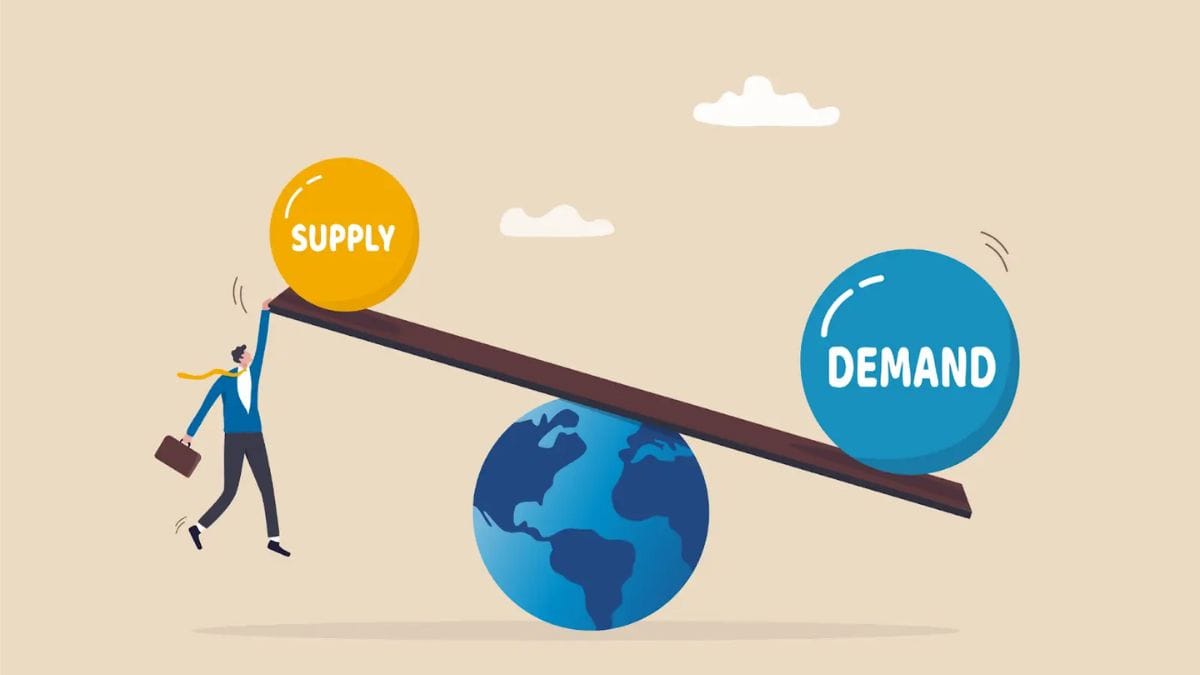
Ever wondered how governments control the flow of money in the economy? Or why interest rates go up and down? That’s where monetary policy comes into play. If you’re new to economics or just trying to know how all of this affects your daily life—from loan EMIs to inflation—this beginner-friendly guide is here to break it all down in simple terms.
Let’s walk through what monetary policy is, how it works, and why it matters to you.
Basics
Monetary policy refers to the process by which a country’s central bank controls the money supply, interest rates, and overall credit in the economy. In India, this job is handled by the Reserve Bank of India (RBI).
The goal? To keep inflation under control, ensure economic growth, and maintain financial stability. It’s like using the accelerator and brake pedals in a car to maintain a smooth ride—too much speed (inflation) can be risky, too little (slow growth) can stall the engine.
Objectives
So, what exactly does monetary policy aim to achieve? Here are the main goals:
- Control inflation
- Encourage economic growth
- Stabilize the currency
- Reduce unemployment
- Maintain financial stability
These objectives might sound ambitious, but with the right tools and timing, a central bank can influence all of them effectively.
Types
Monetary policy mainly comes in two flavors—expansionary and contractionary.
| Type | Purpose | When It’s Used |
|---|---|---|
| Expansionary | Boosts economic activity | During recession or slowdown |
| Contractionary | Slows down inflation | When prices are rising too fast |
Expansionary policy involves lowering interest rates or increasing the money supply, which encourages people to borrow and spend more.
Contractionary policy is just the opposite—it raises interest rates or reduces money flow to curb inflation.
Tools
Central banks don’t just wish inflation away—they use specific tools. Here are the main ones used by the RBI:
- Repo Rate – The rate at which banks borrow money from the RBI. Lower repo = cheaper loans.
- Reverse Repo Rate – The rate at which banks park their money with RBI. Higher reverse repo = less money with the public.
- CRR (Cash Reserve Ratio) – The percentage of money banks must hold in reserve. Higher CRR = less money for lending.
- SLR (Statutory Liquidity Ratio) – The percentage of assets banks must maintain in liquid form.
- Open Market Operations (OMOs) – Buying or selling government bonds to control liquidity.
RBI’s Role
The Reserve Bank of India’s Monetary Policy Committee (MPC) meets every two months to review the country’s economic conditions and decide whether to raise or lower interest rates.

Their decisions impact not just banks and corporates, but also everyday people. For instance, if RBI cuts rates, loans become cheaper. That means lower EMIs for you. On the flip side, fixed deposit returns might drop.
Impact
Monetary policy affects nearly every aspect of the economy—and your daily life too.
| Area | Effect of Monetary Policy |
|---|---|
| Loans | Interest rates go up/down |
| Savings | Returns on FDs and savings vary |
| Inflation | Prices may rise or fall |
| Jobs | Job creation speeds up or slows down |
| Business Growth | Easier or harder to raise funds |
So next time you hear that RBI has changed the repo rate, you’ll know that it’s not just economic jargon—it might mean a higher EMI or better borrowing rates.
Limitations
Monetary policy isn’t perfect. It has its challenges:
- There’s often a time lag before its effects show up
- It may not work well during extreme recessions
- People’s behavior isn’t always predictable
- If banks don’t pass on the rate cuts, it becomes ineffective
That’s why it often works best when combined with fiscal policy, which deals with government spending and taxation.
Knowing monetary policy doesn’t require a PhD. At its core, it’s about balance—making sure the economy grows steadily without going off track. Whether you’re saving for a car, planning a loan, or just trying to understand why prices keep rising, monetary policy plays a role in it all.
FAQs
Who controls monetary policy in India?
The Reserve Bank of India (RBI) handles monetary policy.
What is the repo rate?
It’s the interest rate at which RBI lends to banks.
How does it affect EMIs?
Lower rates reduce EMIs, higher rates increase them.
Is it the same as fiscal policy?
No, fiscal policy is about government spending and taxes.
What happens in contractionary policy?
Interest rates rise to control inflation and reduce money flow.