Canada has long been celebrated for its inclusive immigration policies and progressive stance on LGBTQ+ rights. But a new twist in immigration fraud is shaking public confidence – and it’s raising serious concerns.
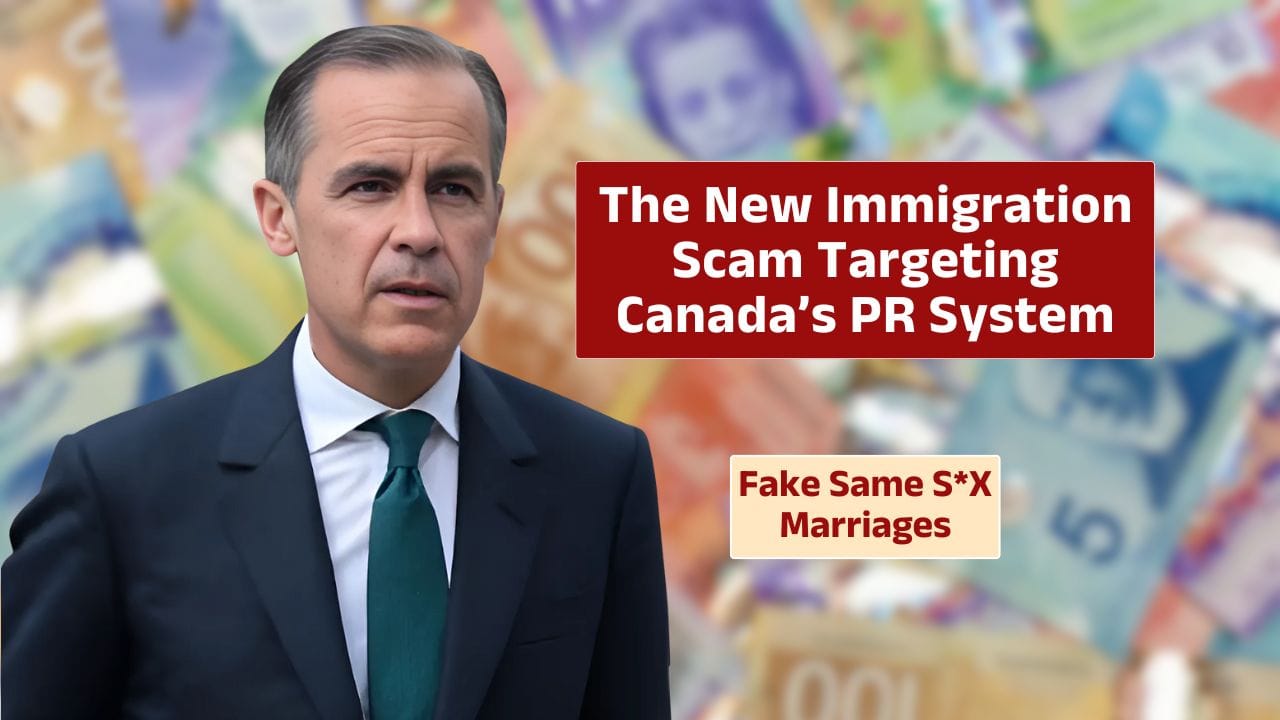
According to a viral claim by a Canadian influencer, some individuals are allegedly entering fake same-s*x marriages to exploit spousal sponsorship and secure permanent residency (PR).
Sound shocking? It’s not just social media noise. As immigration levels soar and fraud cases rise, the claim taps into real fears that the system is being gamed. Let’s break down how these scams supposedly work, why same-s*x marriages are being targeted, and what it all means for Canada’s immigration credibility.
Trend
The buzz began when a video posted on Instagram claimed fake same-s*x marriages are surging in Ontario. The reason? A loophole in the spousal sponsorship process.
Here’s the alleged playbook: One person is already a Canadian citizen or PR. The other is an international student or temporary worker facing visa expiry. To avoid deportation or the long wait times in regular immigration channels, they team up and stage a same-s*x marriage. With fabricated photos, chats, and rent agreements, they convince authorities their relationship is genuine.

Some believe same-s*x couples receive less scrutiny from immigration officers – possibly due to sensitivity concerns around LGBTQ+ issues. If true, that perception alone could attract more fraudsters looking for an easier route into Canada.
Reality
Canada’s spousal sponsorship program is a popular PR pathway. It doesn’t rely on point-based metrics like language scores or degrees. It simply requires the relationship to be real.
And this is where scammers see an opening. Unlike employment-based immigration, which is merit-driven, sponsorship hinges on personal bonds. Faking love, sadly, has become a business.
According to Reddit threads and community posts, these sham arrangements are reportedly common among individuals from the same ethnic or cultural backgrounds. Word-of-mouth and underground brokers are allegedly facilitating deals ranging from $20,000 to $50,000.
There’s also a common-law twist: Two friends who’ve lived together in Canada – perhaps as students or roommates – can sometimes qualify as common-law partners. This status can be used to file PR applications together, even if they’re not romantically involved.

Framework
To understand how this scam is possible, let’s look at how Canada’s immigration sponsorship process works.
Here’s what’s needed:
Key Eligibility Requirements
| Category | Requirement |
|---|---|
| Sponsor | Must be 18+, Canadian citizen or PR |
| Reside in Canada (PRs must apply from inside Canada) | |
| Not receiving social assistance (unless disabled) | |
| No criminal record or past sponsorship violations | |
| Sponsored Person | Must be 18+ |
| Marriage must be legally valid | |
| Common-law: 12 months cohabitation | |
| Conjugal: One-year bond without cohabitation |
Documents must include proof of shared life – like photos, chats, joint bills – and both parties undergo background checks and interviews.
Same-s*x marriages have been legal in Canada since 2005, and are treated the same as heterosexual marriages by Immigration, Refugees and Citizenship Canada (IRCC).
Concerns
This growing trend brings multiple issues:
- Integrity of the System:
Spousal sponsorship depends on trust. Fraud undermines that and clogs the system for legitimate applicants. Processing times, already long (12-18 months), may worsen. - Stigma on LGBTQ+ Couples:
If same-s*x marriage fraud becomes widespread, genuine LGBTQ+ applicants could face harsher scrutiny. This may lead to discriminatory behavior, even if unintended. - Public Trust:
Canadians expect fairness. News of scams – especially ones involving sensitive issues – can lead to backlash and policy tightening. - Policy Blind Spots:
Critics argue that immigration officers may hesitate to probe same-s*x couples too deeply, out of fear of being labeled insensitive. This leaves room for manipulation.
History
Marriage fraud isn’t new. For decades, Canada has dealt with “marriages of convenience” from countries like India, China, and the Philippines. In the 2010s, the government introduced conditional PR status, requiring couples to live together for two years post-landing. That policy was repealed in 2017.
Now, scammers may be shifting tactics to exploit same-s*x relationships, assuming they’ll be harder to question.
Detection
So how does IRCC catch fake marriages?
- Interviews: Officers ask detailed questions – about how the couple met, what they eat for dinner, who sleeps on which side of the bed.
- Paper Trails: Bills, leases, social media, and communication logs are analyzed.
- AI Tools: New fraud detection systems flag suspicious patterns, like back-to-back sponsorships or mismatched timelines.
If found guilty of fraud, both the sponsor and applicant can face serious consequences:
- Five-year ban from reapplying
- $100,000 fine
- Jail time up to five years
Yet, real couples still face risks. LGBTQ+ immigrants may be from cultures where coming out is dangerous. Some might lack public photos or shared accounts due to fear of being ostracized. These legitimate barriers can be misread as fraud red flags.
Balance
Canada walks a tightrope. On one side: stopping abuse. On the other: protecting human rights. The recent claims of fake same-s*x marriages push this tension to the forefront.
More than ever, IRCC must balance vigilance with compassion. Same-s*x couples shouldn’t be scapegoated, but neither should fraud be ignored. Officers need better training to detect scams without falling into bias.
As for the public? Stay alert but informed. Immigration fraud is real – but painting entire groups with the same brush helps no one.
While the influencer’s viral video may have sparked outrage, it also opened a vital conversation. If we want a fair, welcoming, and secure immigration system, we need transparency, consistent checks, and equal respect for all.
FAQs
What is a fake same-s*x marriage scam?
It’s when people stage same-s*x relationships to get Canadian PR.
Is same-s*x marriage legal in Canada?
Yes, Canada legalized same-s*x marriage in 2005.
Can IRCC detect marriage fraud?
Yes, through interviews, document checks, and AI tools.
What are the penalties for sponsorship fraud?
Fines, jail time, and bans from reapplying for 5 years.
Are LGBTQ+ couples scrutinized more now?
They may face added checks due to rising fraud concerns.