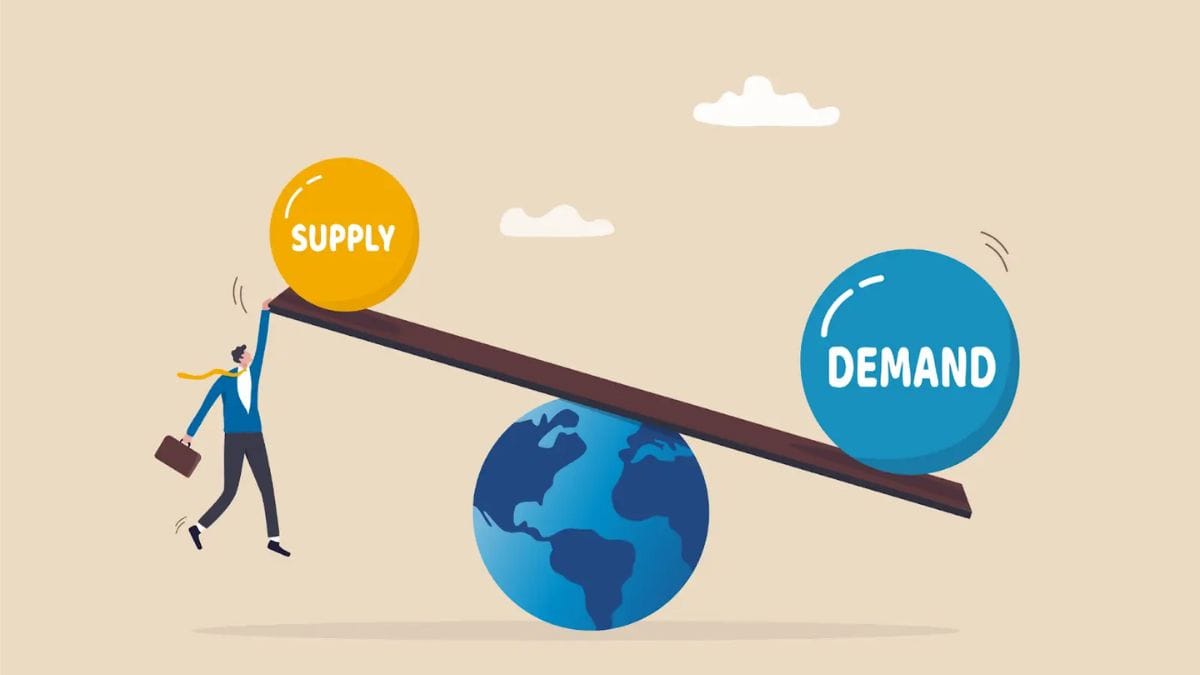
GDP is one of those terms we hear in the news all the time. “GDP growth slows down,” “GDP expands by 7%,” “GDP per capita rises”—but what does it actually mean?
If you’ve ever wondered what GDP is and how it’s calculated, you’re in the right place. Let’s break it down in plain English, without the confusing jargon.
Meaning
GDP stands for Gross Domestic Product. It’s the total value of all goods and services produced within a country over a specific time period—usually a year or a quarter.
Think of GDP as a giant report card for a country’s economy. If the GDP is growing, the economy is doing well. If it’s shrinking, there could be trouble ahead.
In short:
GDP = Total economic output of a country
Why It Matters
So, why do economists and politicians care so much about GDP?
Because it tells us how healthy an economy is.
- Rising GDP = More jobs, more business activity, rising incomes
- Falling GDP = Slower growth, job cuts, and lower spending
GDP also helps in comparing countries, setting government budgets, and attracting investments. It’s like the scoreboard of global economics.
Components
GDP has four major components. You can remember them with the formula:
GDP = C + I + G + (X – M)
Here’s what that means:
| Component | Description | Example |
|---|---|---|
| C – Consumption | Spending by households | Groceries, phones, clothes |
| I – Investment | Business spending on capital goods | Machines, buildings, inventory |
| G – Government | Government spending on goods/services | Roads, defense, salaries |
| X – Exports | Goods we sell to other countries | Software, textiles, tea |
| M – Imports | Goods we buy from other countries (subtracted) | Oil, electronics, gold |
Methods
There are three main ways to calculate GDP. All of them should ideally give the same result:
1. Production Method (Output Method)
Adds up the value of everything produced in the economy.
Formula:
GDP = Value of all goods and services produced – Value of intermediate goods
2. Income Method
Adds up all incomes earned by people and businesses.
Formula:
GDP = Wages + Rent + Interest + Profits + Taxes – Subsidies
3. Expenditure Method
Adds up all spending on goods and services.
Formula:
GDP = Consumption + Investment + Government Spending + (Exports – Imports)
This is the most commonly used method worldwide.
Nominal vs Real GDP
What’s the difference?
- Nominal GDP: Calculated at current market prices (includes inflation)
- Real GDP: Adjusted for inflation to reflect true growth
Example:
If GDP grows 8% but inflation is 5%, the real growth is just 3%.
So, Real GDP = Nominal GDP – Inflation
Real GDP gives a better idea of whether the economy is genuinely growing or just inflated by price hikes.
GDP Per Capita
GDP per capita means GDP divided by the population. It shows the average income or economic output per person.
Formula:
GDP per capita = Total GDP / Total population
It’s often used to compare living standards across countries. A high GDP per capita usually means a richer country.
Example
Let’s look at a simplified example:
| Component | Value (in ₹ crore) |
|---|---|
| Consumption (C) | ₹ 10,000 |
| Investment (I) | ₹ 3,000 |
| Government Spending (G) | ₹ 4,000 |
| Exports (X) | ₹ 2,000 |
| Imports (M) | ₹ 1,000 |
GDP = C + I + G + (X – M)
= 10,000 + 3,000 + 4,000 + (2,000 – 1,000)
= ₹ 18,000 crore
That’s the total value of goods and services produced in that period.
Limitations
While GDP is useful, it’s not perfect. It doesn’t include:
- Unpaid work (like household labor)
- Black market activity
- Environmental impact
- Happiness or well-being
So a country may have high GDP but still suffer from inequality or pollution. That’s why economists also look at other indicators like HDI (Human Development Index).
GDP is like the speedometer of a car—it tells you how fast you’re going, but not whether you’re headed in the right direction.
GDP is a powerful tool to measure economic activity, but it should be viewed with context. Understanding what goes into GDP helps you read the economy better—whether it’s your country’s budget, stock market news, or job prospects. So next time you hear “GDP growth slowed,” you’ll know exactly what that means.
FAQs
What does GDP stand for?
GDP stands for Gross Domestic Product.
How is GDP calculated?
By adding consumption, investment, government spending, and net exports.
What is real GDP?
It’s GDP adjusted for inflation to show true growth.
What is GDP per capita?
GDP divided by the population, showing average income.
Why is GDP important?
It reflects the economic health and growth of a country.