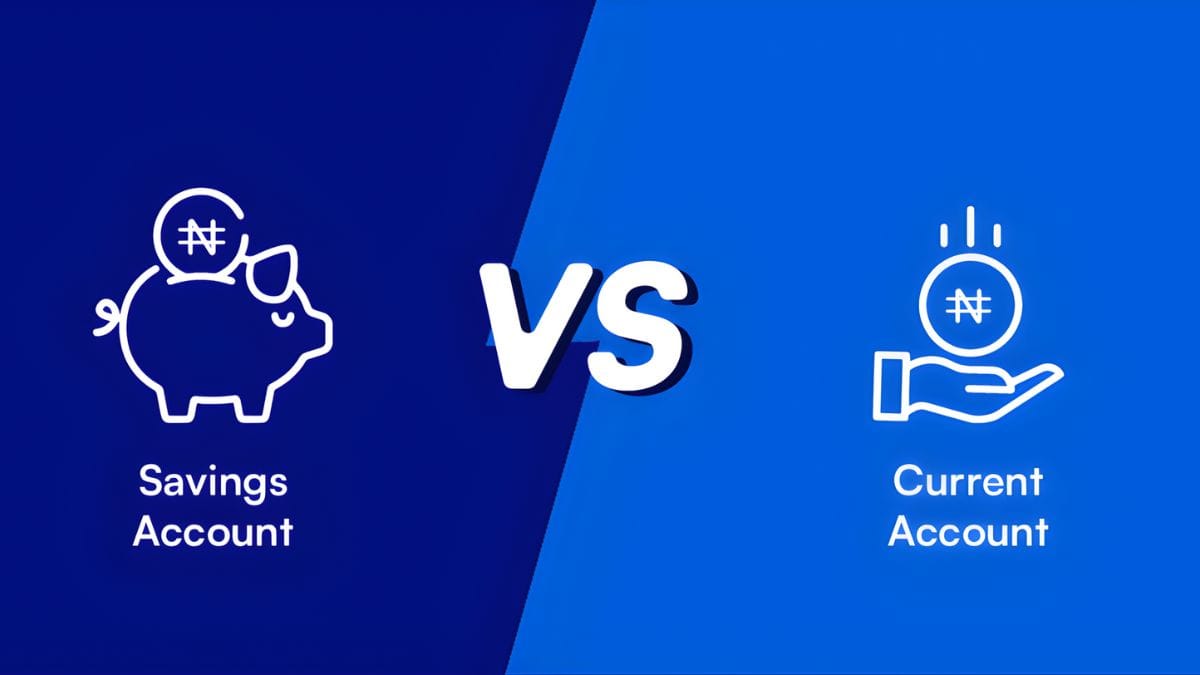
Trying to choose between a savings account and a current account? You’re not alone. These two types of bank accounts may seem similar at first glance, but they serve totally different purposes. One is perfect for stashing away cash, and the other is built for daily transactions. In this article, we’ll break down their features, uses, and differences in simple terms so you can decide which one suits your needs.
Meaning
Let’s start with the basics.
A savings account is designed to help you save money. It’s ideal if you want to set aside cash and earn some interest while doing so. Most people use it for emergency funds or long-term savings.
A current account, on the other hand, is more like a money hub for everyday spending. You use it for transactions like paying bills, withdrawing cash, or receiving salaries. It doesn’t usually earn much interest, if any.
Purpose
These two accounts are built for different goals.

- Savings Account: Best for storing money you don’t need to access often. It encourages saving by offering interest.
- Current Account: Made for frequent, daily transactions. Think of it as your financial operating base.
If you’re looking to grow your money, savings is the way to go. If you’re looking for convenience, current wins.
Features
Let’s compare their key features side by side:
| Feature | Savings Account | Current Account |
|---|---|---|
| Purpose | Save money and earn interest | Daily transactions |
| Interest | Usually earns interest | Often earns little or none |
| Withdrawal Limits | Limited per month | Unlimited transactions |
| Cheque Book Facility | Sometimes available | Always available |
| Minimum Balance | Generally lower | Can be higher |
| Overdraft Facility | Usually not offered | Commonly available |
| ATM/Debit Card | Available | Available |
This table gives you a quick look at the pros and cons of each.
Benefits
Each account type comes with its own set of advantages.
Savings Account:

- Helps grow money over time
- Encourages disciplined saving
- Lower risk of overspending
- May come with automatic deposit features
Current Account:
- Easy access to funds
- Unlimited transactions
- Useful for businesses and professionals
- Supports direct deposits, payments, and transfers
Who Should Use It?
Not sure which one is right for you? Here’s a quick guide:
- Savings Account: Great for students, salaried employees, or anyone looking to build a financial cushion.
- Current Account: Ideal for business owners, freelancers, and people who need to manage frequent inflows and outflows.
You can also have both—use the current account for daily spending and the savings account for building up your money.
Interest
One of the biggest differences is interest.
- Savings accounts offer a small interest rate (usually between 2% and 4%) depending on the bank and country.
- Current accounts typically don’t offer any interest since they’re meant for transactions, not savings.
If earning on your deposits matters to you, a savings account is the better pick.
Limits
Savings accounts often come with limits on how many withdrawals or transfers you can make per month. That’s to stop people from treating them like checking accounts.
Current accounts don’t have these limits. You can make as many payments, transfers, or withdrawals as you like, which is why they’re popular for business use.
Knowing when to use a savings or current account can help you manage your money more effectively. Savings accounts are perfect for growing your funds slowly and safely, while current accounts are your best friend for everyday spending. They’re not competitors—they actually work great together. Just pick the right one for your goal, or better yet, use both to balance convenience and growth.
FAQs
What is a savings account?
A bank account meant for saving money and earning interest.
What is a current account?
A transaction-based account for daily financial activities.
Do current accounts earn interest?
Usually no, they’re built for frequent transactions.
Can I have both account types?
Yes, and using both is often a smart move.
Which account is best for business?
A current account is better for business transactions.