Compound interest might sound like a finance buzzword, but it’s actually one of the most powerful money-making (or money-growing) concepts out there. Whether you’re saving in a bank account or investing in mutual funds, compound interest plays a big role in how your money grows over time. In this article, we’ll break it down in simple terms—what it is, how it works, and a few easy examples to make it all click.
Meaning
Let’s start with the basics.
Compound interest is the interest you earn on your initial amount plus the interest that gets added over time. In short, it’s interest on interest.
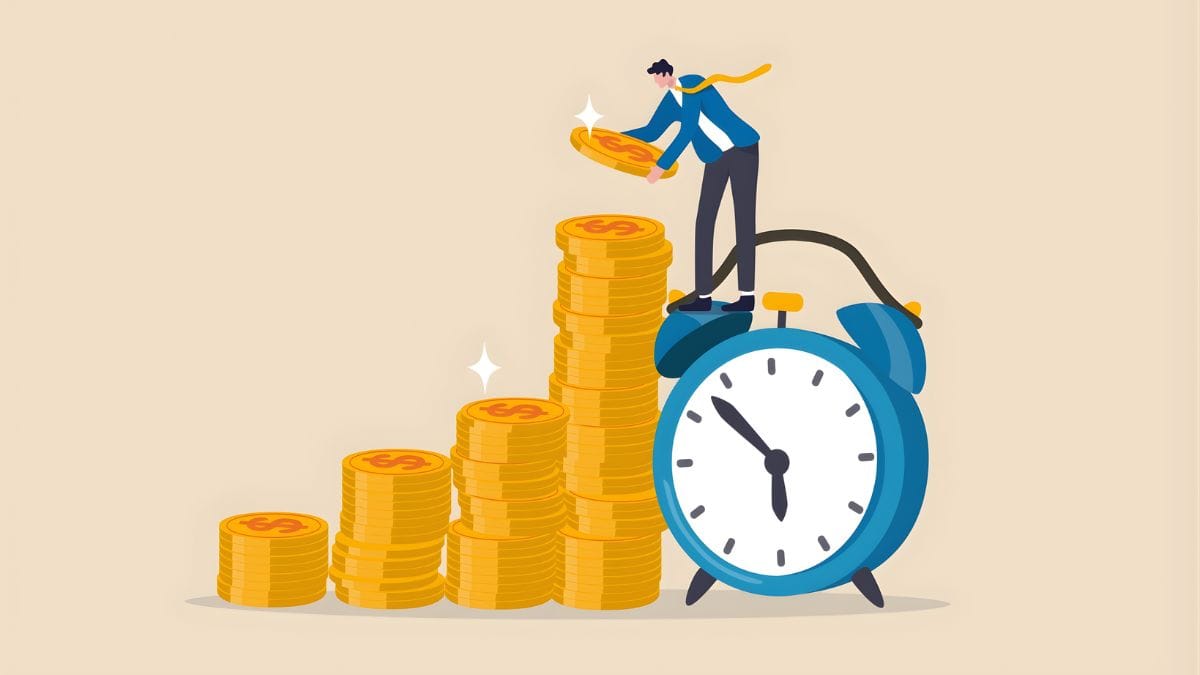
Imagine planting a tree, and it grows fruits every year. Then those fruits grow their own trees and start giving you even more fruits. That’s how compound interest works. It keeps building on itself, and the longer you leave it, the bigger it grows.
Formula
If you like math (even just a little), here’s the standard formula for compound interest:

A = P (1 + r/n) ^ nt
Where:
- A = Final amount (after interest)
- P = Principal (initial amount)
- r = Annual interest rate (in decimal)
- n = Number of times interest is compounded per year
- t = Time in years
To find just the compound interest, subtract the principal:
CI = A – P
Example1: Annual Compounding
Let’s say you invest ₹10,000 at 10% interest compounded annually for 3 years.
Using the formula:

- P = 10,000
- r = 0.10
- n = 1
- t = 3
A = 10,000 (1 + 0.10/1) ^ (1×3) = 10,000 (1.10)^3 = ₹13,310
So, compound interest = ₹13,310 – ₹10,000 = ₹3,310
As you can see, the interest grows more each year:
| Year | Interest Earned | Total Amount |
|---|---|---|
| 1 | ₹1,000 | ₹11,000 |
| 2 | ₹1,100 | ₹12,100 |
| 3 | ₹1,210 | ₹13,310 |
Example2: Quarterly Compounding
Now let’s say the same ₹10,000 is invested at 10% interest compounded quarterly for 2 years.
- P = ₹10,000
- r = 0.10
- n = 4
- t = 2
A = 10,000 (1 + 0.10/4) ^ (4×2) = 10,000 (1.025)^8 ≈ ₹12,189.94
So, compound interest = ₹12,189.94 – ₹10,000 = ₹2,189.94
Quarterly compounding gives slightly more than annual, because interest is added more often.
Why It Matters
You might be thinking—okay, but why should I care?
Because compound interest rewards patience. The earlier you start saving or investing, the more you benefit. Even small amounts can grow big over time.
For example:
| Starting Age | Monthly Investment | Total After 30 Years (10% annual return) |
|---|---|---|
| 25 | ₹2,000 | ₹41.4 lakhs |
| 35 | ₹2,000 | ₹15.2 lakhs |
Just by starting 10 years earlier, your total becomes nearly 3 times bigger!
Daily Uses
Compound interest isn’t just for savings. It pops up in many places:
- Fixed deposits
- Recurring deposits
- Mutual funds
- Loans (yes, even EMIs)
- Credit cards (on unpaid dues)
That means it can work for you (in savings) or against you (in debt). So, use it wisely.
Tips
To make compound interest work for you:
- Start early: Time is your best friend.
- Stay consistent: Invest regularly, even if it’s small.
- Avoid withdrawals: Let your money grow uninterrupted.
- Reinvest your returns: That’s how compounding really kicks in.
Compound interest isn’t magic—but it sure feels like it. Over time, it can turn average savers into wealth creators. Whether you’re saving for retirement, your dream home, or just building wealth, let compound interest be your secret weapon. And remember—the best time to start was yesterday. The second-best time is now.
FAQs
What is compound interest in simple words?
It’s interest on the initial amount plus interest already earned.
How is compound interest calculated?
Using the formula A = P(1 + r/n)^nt.
Which is better: simple or compound interest?
Compound interest grows faster over time.
Where is compound interest used?
In savings accounts, loans, FDs, credit cards, and investments.
Does compound interest help in long-term savings?
Yes, the longer you invest, the more it grows.