Ever heard of Bitcoin skyrocketing or real estate prices going through the roof, only to crash later? That’s a classic sign of a financial bubble. But what exactly is a financial bubble, and why do people fall for them over and over again? Don’t worry, we’ll break it down in simple terms—with real historical examples to help you understand it like a pro.
Meaning
A financial bubble happens when the price of an asset—like stocks, real estate, or even tulips (yes, really)—rises way beyond its real value. It’s usually driven by excessive enthusiasm, speculation, and the belief that prices will keep going up forever.
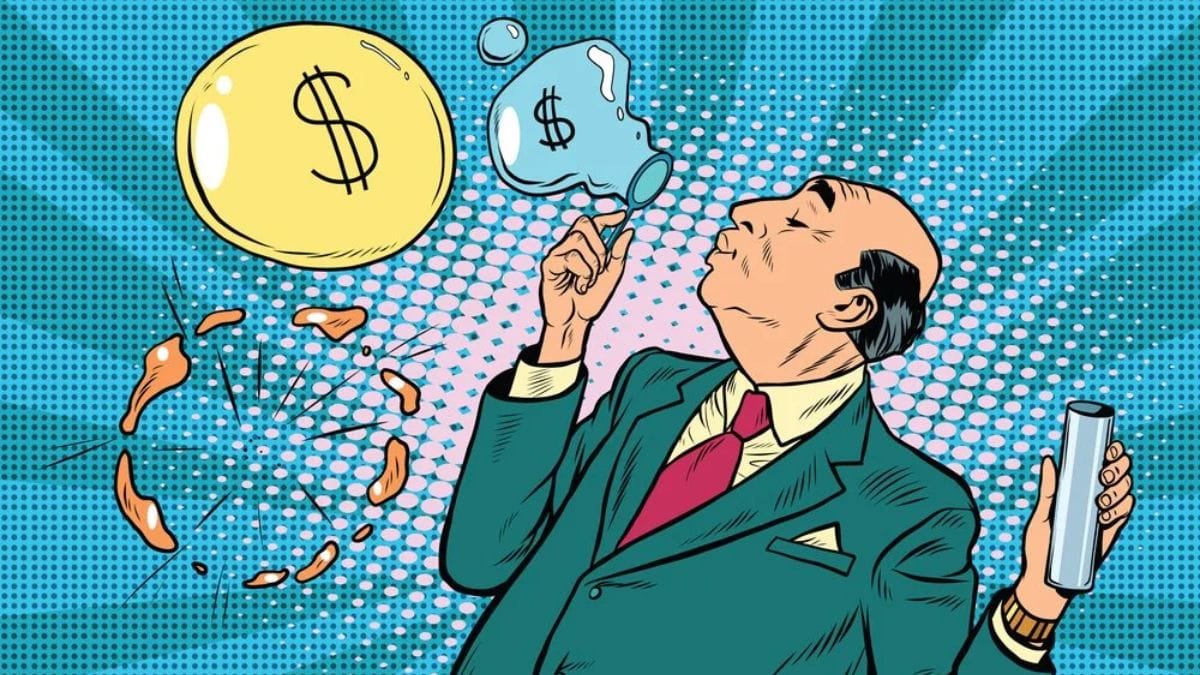
Imagine blowing air into a balloon. At first, it looks fine. But if you keep inflating it, it gets bigger and riskier—until pop, it bursts. That’s what happens in a financial bubble: prices inflate irrationally, then collapse suddenly, leaving investors with huge losses.
Stages
Most bubbles follow a predictable pattern. Here’s a simple breakdown:
| Stage | What Happens |
|---|---|
| Stealth Phase | Smart investors quietly start buying |
| Awareness | More people notice, prices begin rising |
| Mania | Everyone wants in, media hypes it up |
| Blow-off | Prices crash, panic selling begins |
It all starts with something real—like a tech breakthrough or a housing boom—but greed and FOMO (fear of missing out) take over, turning a solid investment into a risky bet.
Tulipmania
Let’s go way back to 17th-century Netherlands. Tulips were the trendiest thing around—symbolizing wealth and class. As demand grew, prices of tulip bulbs skyrocketed. Some rare varieties were selling for more than a house!
People started buying tulips not for love of flowers, but to sell them at higher prices. It worked—for a while. Then reality hit. Prices collapsed almost overnight, and many were left bankrupt.
This is often called the first financial bubble in history.
Dot-com
Fast forward to the late 1990s. The internet was booming, and tech startups were everywhere. Investors poured money into any company with a “.com” at the end of its name—even if it had no profit or product.
Stock prices of internet companies soared beyond logic. But by 2000, the bubble burst. Most of these companies vanished, and trillions of dollars were lost in the market crash.

Still, the internet didn’t die—big players like Amazon and Google survived and thrived. But the bubble taught a tough lesson: hype doesn’t equal value.
Housing
The 2008 Global Financial Crisis was triggered by a housing bubble in the U.S. For years, house prices kept rising. Banks gave home loans to people who couldn’t afford them. These risky loans were packaged and sold as “safe” investments.
When borrowers started defaulting, the market crashed. Home prices fell, banks collapsed, and the entire global economy went into a tailspin.
This is a classic example of how bubbles can have real, devastating impacts.
Crypto
More recently, we’ve seen huge price jumps in cryptocurrencies, especially Bitcoin. In 2017 and again in 2021, prices shot up rapidly as retail investors jumped in. People believed Bitcoin would hit the moon.
But prices crashed sharply both times, wiping out billions. While crypto is still evolving and may not be entirely a bubble, these extreme price swings are bubble-like behavior fueled by speculation.
Lessons
So, what can we learn from all this?
- Hype is dangerous: Just because something is popular doesn’t mean it’s valuable.
- Don’t invest blindly: Always understand what you’re investing in.
- History repeats: Bubbles have happened before—and will happen again.
- Greed is risky: Chasing fast money often leads to fast losses.
- Value matters: Long-term success depends on real worth, not just price.
Bubbles aren’t always easy to spot while you’re in one. That’s what makes them tricky. But being aware of the warning signs and staying grounded can help you avoid being the one holding the balloon when it pops.
FAQs
What causes a financial bubble?
Speculation, hype, and excessive buying beyond actual value.
Can bubbles be predicted?
Not always, but warning signs like rapid price hikes help.
Is Bitcoin a financial bubble?
It has shown bubble-like patterns, but the future is uncertain.
What happens when a bubble bursts?
Prices crash fast, causing panic and heavy financial losses.
How can I avoid bubble investments?
Research thoroughly, focus on value, and avoid herd mentality.