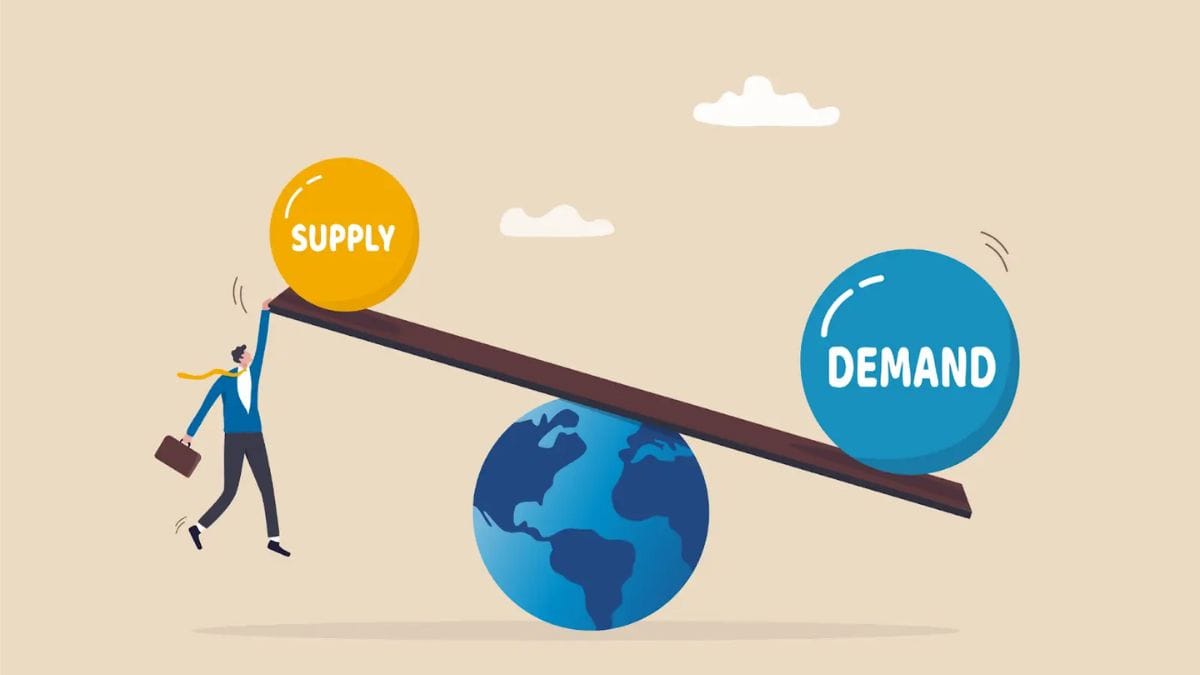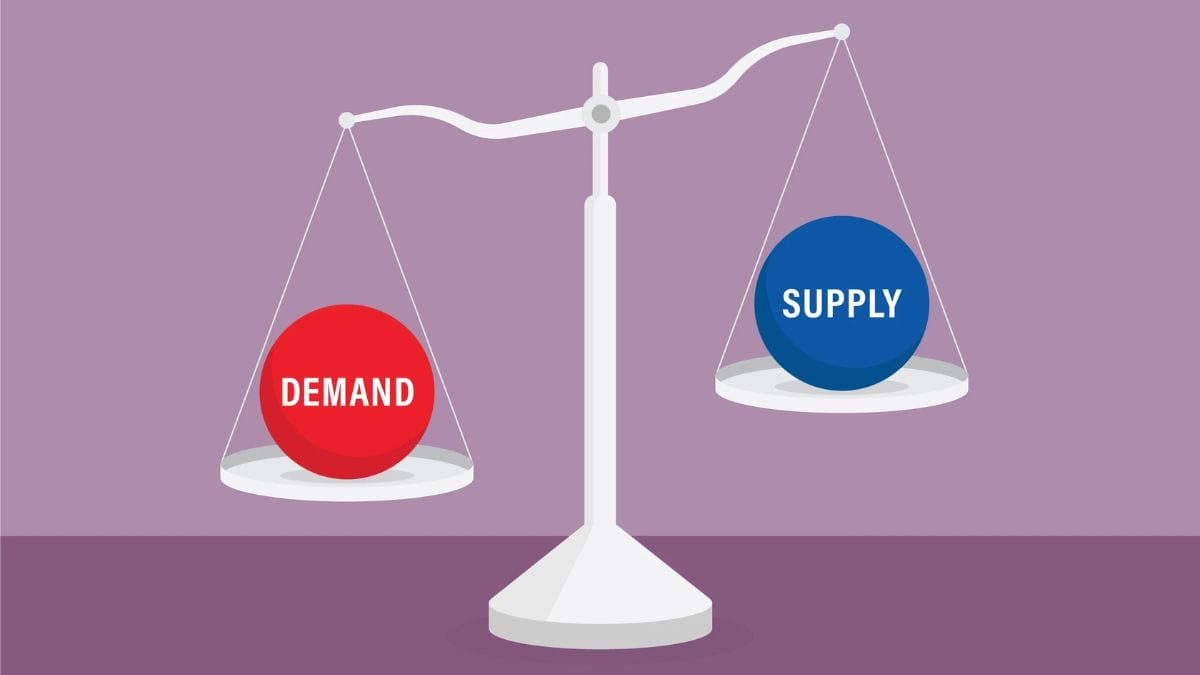
Ever wondered why the price of onions goes up during a shortage or why discounts flood the market during clearance sales? Behind every price tag, shopping choice, or business strategy lies the most fundamental concept in economics — demand and supply.
Whether you’re a student new to economics or just curious about how markets work, knowing demand and supply is the first step toward grasping how economies function. Let’s break it down in simple terms, without the jargon.
Meaning
Demand is how much of a product or service people want at a particular price.
Supply is how much of that product or service sellers are willing to offer at that price.
Sounds simple? That’s because it is — but it has powerful implications. When these two forces interact, they determine the price and quantity of almost everything in the market.
Law of Demand
The Law of Demand says that when the price of something goes up, the quantity demanded goes down, and vice versa — assuming everything else stays the same.
For example, if movie tickets suddenly cost ₹500, fewer people would want to go. But if the price drops to ₹100, the theatre will likely be packed.
This happens because:
- Consumers always look for value
- People have limited budgets
- Substitutes become more attractive at higher prices
Law of Supply
On the flip side, the Law of Supply says that when prices increase, producers are willing to supply more, and when prices fall, they supply less.
Think of a farmer. If potato prices are high, they’ll want to grow and sell more. If prices crash, they may switch to another crop.
So, sellers are motivated by profits, which go up when prices rise.
Equilibrium
The magic happens where demand and supply meet — this point is called equilibrium. It’s the price at which buyers are happy to buy and sellers are happy to sell.
At this price:
- There’s no shortage
- There’s no surplus
- The market is “balanced”
But this balance isn’t fixed — it shifts with changes in factors like income, technology, weather, or government policies.
Graph Basics
To understand how demand and supply interact, economists often use graphs. Here’s a basic idea:
- Demand Curve: Slopes downward from left to right (price goes down, demand goes up)
- Supply Curve: Slopes upward from left to right (price goes up, supply goes up)
- Equilibrium Point: Where both curves intersect
This point tells us the market price and quantity traded.
Real Life Examples
Let’s see how this works in everyday life.
| Scenario | What Happens |
|---|---|
| iPhones launch a new model | High demand → Prices stay high initially |
| Flood destroys crops | Supply falls → Prices of vegetables rise |
| End-of-season sale at malls | Low demand → Sellers reduce prices to clear stock |
| Tech improves production | Supply increases → Prices may drop |
These examples show how the real world constantly reacts to changes in demand and supply.
What Shifts Them
While price is the main factor, other things can also shift demand or supply curves:
Factors that shift demand:
- Changes in income
- Consumer preferences
- Price of related goods (substitutes/complements)
- Expectations of future price
Factors that shift supply:
- Changes in input costs
- Technology improvements
- Natural disasters or weather
- Taxes and regulations
A shift means that at the same price, people now want to buy more or less, or suppliers want to sell more or less.
Importance
Why is this concept such a big deal?
Because it helps:
- Understand price fluctuations
- Make business decisions
- Design government policies
- Predict market reactions
- Allocate resources efficiently
Whether you’re selling lemonade, managing a store, or crafting national economic plans — demand and supply play a role in every decision.
Demand and supply might be simple concepts, but they’re the foundation of economics. Like gravity in physics, they explain how everything in a market stays in motion. The more you know them, the better you’ll be at navigating the financial world — as a consumer, investor, policymaker, or entrepreneur.
FAQs
What is demand in economics?
It’s the quantity people are willing to buy at a given price.
What does supply mean?
It’s how much sellers are willing to sell at a given price.
What is market equilibrium?
It’s the price where demand and supply are equal.
What causes demand to increase?
Rising income, trends, or price drops of complementary goods.
What shifts supply curves?
Input costs, technology, and government policies can shift supply.