Ever heard the term “market cap” while reading about stocks or companies and wondered what it actually means? Don’t worry—you’re not alone. It sounds complex, but it’s actually one of the easiest financial concepts to know once it’s broken down.
In simple terms, market capitalization (or market cap) is a quick way to figure out how big a company is in the stock market. Let’s cut in and explain what market cap is, how it works, and why investors care so much about it.
Meaning
Market capitalization is the total value of a company’s shares on the stock market.
It’s calculated using a simple formula:
Market Cap = Share Price × Total Number of Shares
So, if a company’s share is ₹500 and it has 10 lakh shares, its market cap is:
₹500 × 10,00,000 = ₹50 crore
This number tells us how big the company is in terms of stock market value—not its physical size or sales, but how much investors think the company is worth.
Types
Companies are usually grouped by size based on their market cap. Here’s a breakdown:
| Category | Market Cap Range | Example (India) |
|---|---|---|
| Large-cap | ₹20,000+ crore | Reliance, TCS, Infosys |
| Mid-cap | ₹5,000 – ₹20,000 crore | LIC Housing, Voltas, ABB |
| Small-cap | Below ₹5,000 crore | RattanIndia, Suzlon, etc. |
These categories help investors decide how much risk they’re willing to take. Usually:
- Large-caps = More stable, less risky
- Mid-caps = Balanced growth and risk
- Small-caps = High growth potential, but more risk
How It Works
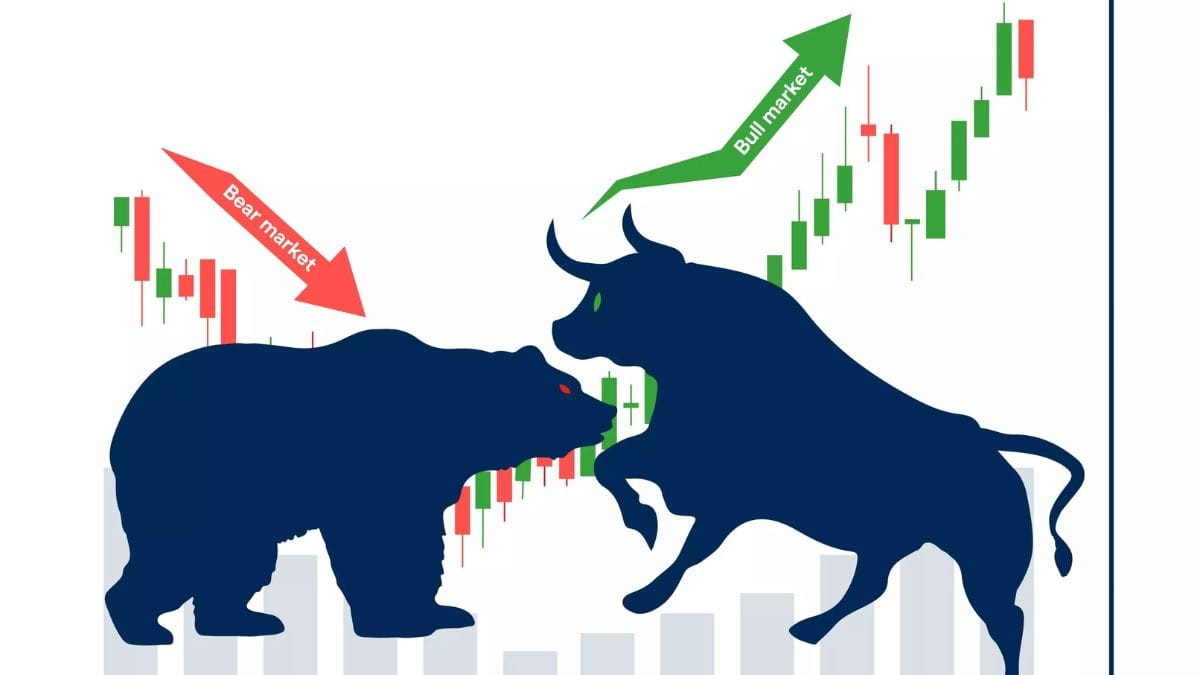
Market cap changes daily because stock prices move constantly. If a company’s share price goes up, its market cap increases—even if nothing else changes.
Let’s say:
- Company A has 1 crore shares at ₹100 = ₹100 crore market cap
- The share price rises to ₹120 = ₹120 crore market cap
That means investors are now valuing the company higher—even if profits didn’t change.
It’s also important to note:
- Issuing new shares increases market cap
- Share buybacks can reduce it
Market cap reflects investor perception, not just company performance.
Why It Matters
So why do people care about market cap? Because it helps in:
- Comparing companies: Easier to compare Tata Motors and Infosys when you know their size.
- Investment strategy: Helps investors choose between safe bets or high-risk opportunities.
- Index rankings: Stock market indices like Nifty and Sensex are often based on market cap weightage.
- Mergers and acquisitions: Market cap shows whether one company is big enough to acquire another.
For example, if a ₹5,000 crore company wants to buy a ₹50,000 crore firm—it’s unlikely, right? Market cap reveals these power dynamics.
Myths
There are a few common misunderstandings around market cap:
- Myth 1: High share price means high market cap
→ Not true. A ₹100 share of a company with 1 crore shares = ₹100 crore market cap. But a ₹10 share with 100 crore shares = ₹1,000 crore market cap. - Myth 2: Market cap = company’s real worth
→ Market cap is just the market’s perception. It doesn’t include debt, assets, or earnings. - Myth 3: Bigger market cap always means better company
→ Not necessarily. A small-cap could outperform a large-cap in growth.
Risks
Relying only on market cap can be risky. Here’s why:
- It doesn’t show company profits
- It ignores debts and liabilities
- It doesn’t guarantee stock performance
- Market cap can be inflated by hype or speculation
So while market cap is useful, it should be just one part of your analysis before investing.
Knowing market capitalization helps you become a smarter investor. It tells you how big a company is in the eyes of the market and helps you compare it with others. But remember, size isn’t everything. Look at other factors like earnings, debt, and future plans before deciding where to put your money. Use market cap as a guide—not the final answer.
FAQs
What is market cap in simple words?
It’s the total value of a company’s shares in the stock market.
How is market cap calculated?
By multiplying share price with the total number of shares.
What is a large-cap company?
A firm with a market cap above ₹20,000 crore in India.
Does share price affect market cap?
Yes, when share prices go up or down, market cap changes.
Is market cap the same as company value?
Not exactly. It shows market value, not total assets or earnings.