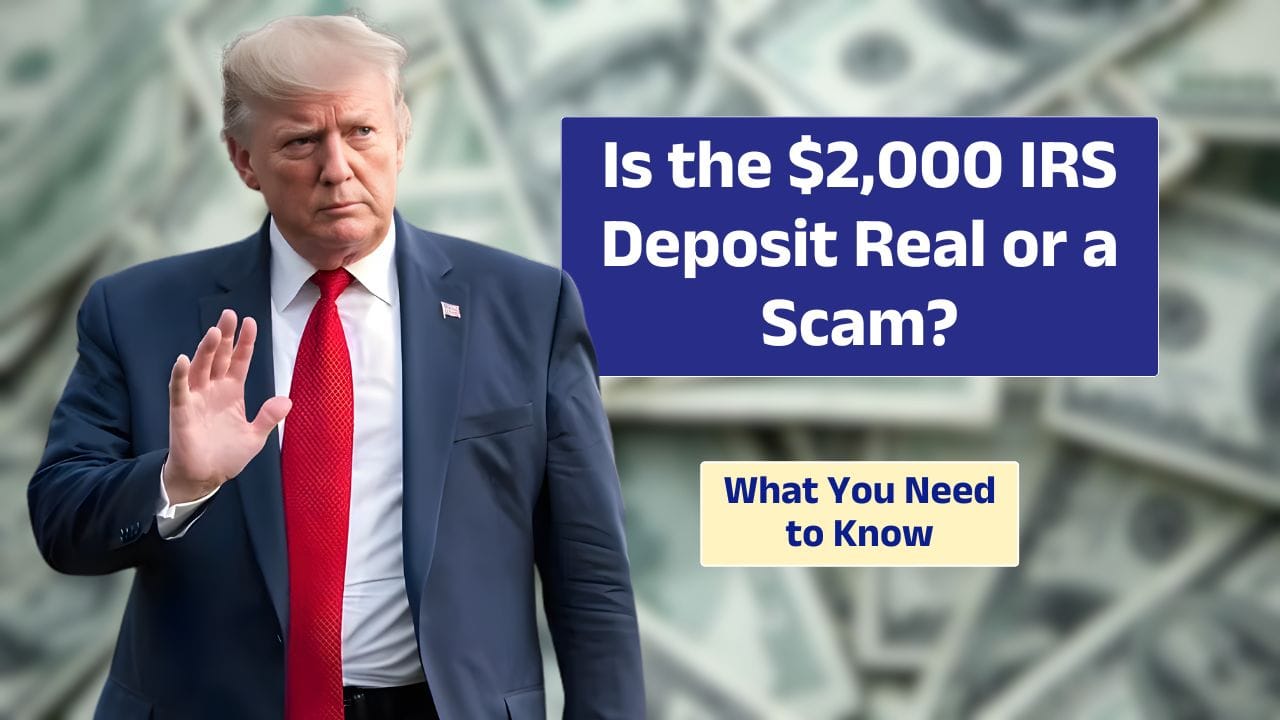
As December rolls in, so does a fresh round of online chatter: “A $2,000 IRS deposit is coming soon,” claim countless social media posts and suspicious websites. These promises often sound official and timely—perfectly crafted for families stressed about winter bills, rising energy costs, and holiday expenses.
But let’s be clear from the start: there is no confirmed $2,000 IRS payment set for December. It’s not real—at least not according to the IRS or any official government source.
Rumors
This claim isn’t exactly new. A few weeks ago, similar rumors flooded the internet about a “November IRS deposit.” It was the same setup: a $2,000 one-time payment, automatic direct deposits, eligibility caps of $75,000 for singles and $150,000 for couples, and a payment schedule with exact dates. But investigations quickly debunked that as false.
Now the scam has been recycled for December. The same wording, timelines, eligibility charts, and even “wave” deposit patterns are popping up—just with new dates from December 9 to 24. If you compare a few of these pages side by side, they’re basically carbon copies of each other. That’s a red flag.
Reality
So what does the IRS actually say? Simple: there is no new federal stimulus program, no $2,000 payout, and no December deposit.

Multiple media outlets, including FOX 5 Washington, the Economic Times, and the Hindustan Times, have checked this claim and confirmed it’s bogus. The IRS hasn’t announced any new round of economic relief. The last official stimulus checks were tied to 2021 tax filings and are no longer being sent.
That $2,000 figure some articles mention? It comes from a political proposal—not an active policy. Former President Donald Trump once floated the idea of using tariff revenue to fund a “tariff dividend” for Americans. But that’s just an idea—not a law. And without a law passed by Congress, the IRS can’t just send money out of the blue.
Pressure
So why does this kind of fake news spread so fast? Easy—because it feels like hope.
Winter is expensive. Heating bills climb, groceries cost more, and rent never takes a holiday. According to the U.S. Energy Information Administration, electricity and natural gas bills are expected to rise this winter. And if your household is already struggling, a surprise $2,000 check sounds like a blessing.
Low-income families feel this most. The Department of Energy reports that poor households can spend more than 15% of their total income on energy alone. That’s why so many people jump on any rumor that promises relief—even if it’s fake.

Help
While there’s no surprise $2,000 deposit coming, real help does exist.
The Low Income Home Energy Assistance Program (LIHEAP) helps with heating and cooling bills. It’s available in all states and funded by the federal government. You won’t get $2,000, but you can get real assistance to avoid shutoffs or keep your home warm.
Another helpful program is the Weatherization Assistance Program (WAP). Instead of helping with just one bill, it improves your home’s energy efficiency. That could mean insulation, air sealing, or better heating equipment—changes that lower bills long-term.
Local utility companies and nonprofits also run smaller assistance programs. These may offer discounts, payment plans, or even emergency funds. No, they’re not flashy, but they’re legit and already in place.
Safety
Scammers know how to make fake offers look real. They use charts, IRS-like language, and even fake deposit schedules to lure people in. But the IRS has made it clear—they won’t send you text messages, DMs, or emails asking you to click a link to “claim” a surprise deposit.
If you want to check if a payment is real, stick to these steps:
- Go directly to the official IRS website
- Log in to your Online IRS Account
- Ask a trusted tax professional
For help with energy bills, go to your state’s LIHEAP office, local government websites, or your utility company’s customer service. Don’t click links in viral posts or suspicious sites that say “confirmed $2,000 payment.”
Scams work because they prey on real need. But real solutions come from verified sources—not TikTok rumors or copy-paste websites.
So unless Congress passes a law, you can safely assume no $2,000 check is coming this December.
FAQs
Is the $2,000 IRS deposit real?
No, it’s a false rumor. There’s no approved payment in December.
Did the IRS confirm any December payments?
No, the IRS has not announced any new December stimulus.
Where did the $2,000 figure come from?
It comes from a political idea, not a real or passed law.
What real programs help with bills?
LIHEAP and WAP help with energy costs and home efficiency.
How can I check if payments are real?
Use the IRS website or speak with a trusted tax advisor.